I'm writing this article out of order from what I specified in the "Return to Form" article. The original title was "What makes me, me - Concepts Around Efficiency, Workflow, etc.", but I chose a more generic title because it doesn't have to specifically be about me. This is more of a brainstorming session personally for me to figure out how I work, how others work, and to pose my ideas in an open space and see if anything resonates with anyone. I got the inspiration to do so, and I sure as hell ain't losing it now. This might be my magnum opus. No other article has ever made me emotional when re-reading it.
I know I put on this big strongman "I am a force of nature" egotistical attitude in all of my articles, and that's because my ego directly represents my self-worth, and my accomplishments directly affect my ego, but I'm not. I struggle with human problems, like this one! Don't worry, this isn't some pity-party article. I want to really talk about how someone gets organized and builds the infrastructure around that organization to make themselves as efficient as possible, to make doing 20 things at once effortless, and to keep track of all these threads of ideas. To be clear, I don't have the answer to this question! I would love your advice to 7666@lain.la or via Fedi, https://comp.lain.la/users/7666.
REQUIRED HOMEWORK BEFORE READING THIS ARTICLE: THIS VIDEO HERE. IT'S ADAM SAVAGE FROM MYTHBUSTERS. YOU'LL LIKE IT. IT MADE ME CRY. I WATCHED IT AGAIN. IT MADE ME CRY AGAIN. https://lain.la/uhgxg6n9.mp4
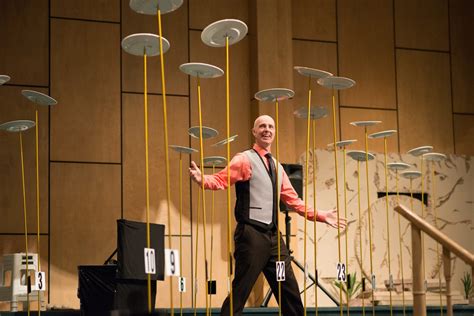
Someone should really stop posting images of me on the internet.
We are going to try to address this problem using a library of concepts, and when I am doing writing them all out, we'll try to string something together. Ok? Ok.
Concept 1: Breaking Work Down Into Digestible Parts
Okay, first up. A table of contents. You ever wonder why I do that in my articles? It's because it organizes my thoughts into clearly distinct "threads". So while writing a big fat article like this might seem daunting, if I can break it down into parts or headers, that gives me jumping off points to work with which I can further digest and start working on. I simply cannot stare at an amorphous body of work and motivate myself to do any of it. An incredibly key pre-requisite is planning, quantification of work, sequencing of events, and so on. This works really incredibly well for me. It's one of the first things I started doing. If I can visualize a problem and its components it becomes clear. When writing this article, I took all the concept headers and wrote them first. That's how I stayed on track. Yes, I may have changed a few over the course of writing this, but at least I got that part right. You want proof? Here! This is what this article looked like at about 50% completion. I was all over the place, but I had the structure, and it let me be completely freeform while keeping me on the right path.
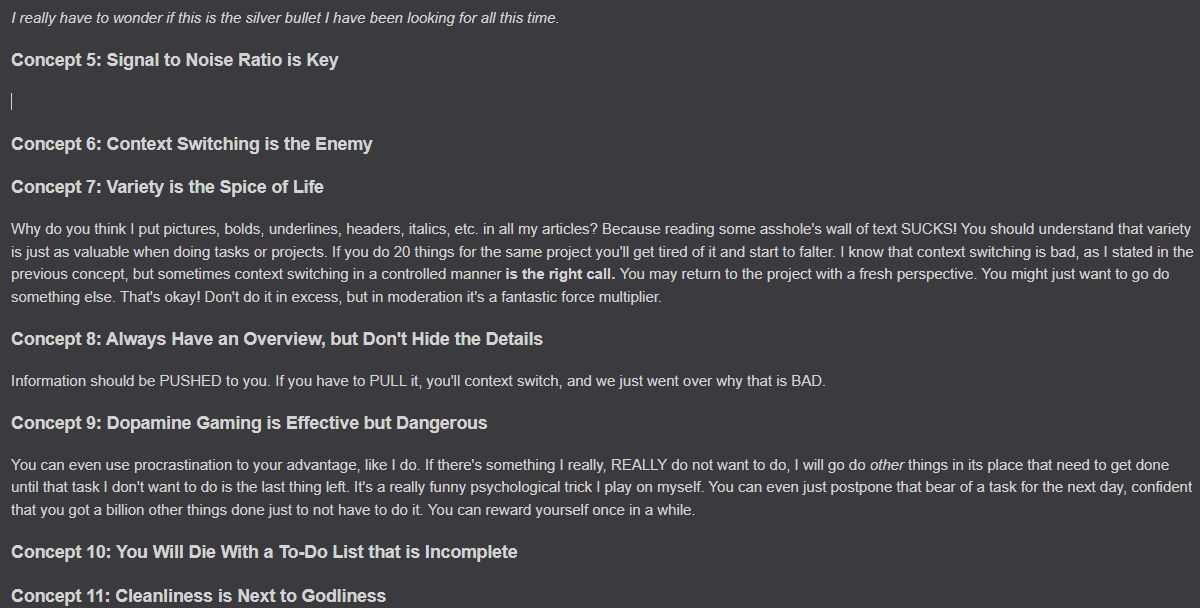
The title of this image above is a Spaceballs joke.
Many businesses use project management platforms for two reasons - Reason 1, the above, and Reason 2: Visibility. Executive bloodsuckers want to know that their minions are doing things without having to ask 6 different project manglers what's going on. You should appropriate that concept for yourself. Find a way to break down your projects into tasks. Track the tasks day-to-day, and the projects holistically. Use the data to feel better about yourself, or estimate when you'll be done with something, whatever works for you. There is a risk that you'll make your personal projects seem like work, so be careful and keep it light hearted. If you turn your personal projects into another job (without the pay) you'll start hating them. See Concept 9 for more info on this pitfall.
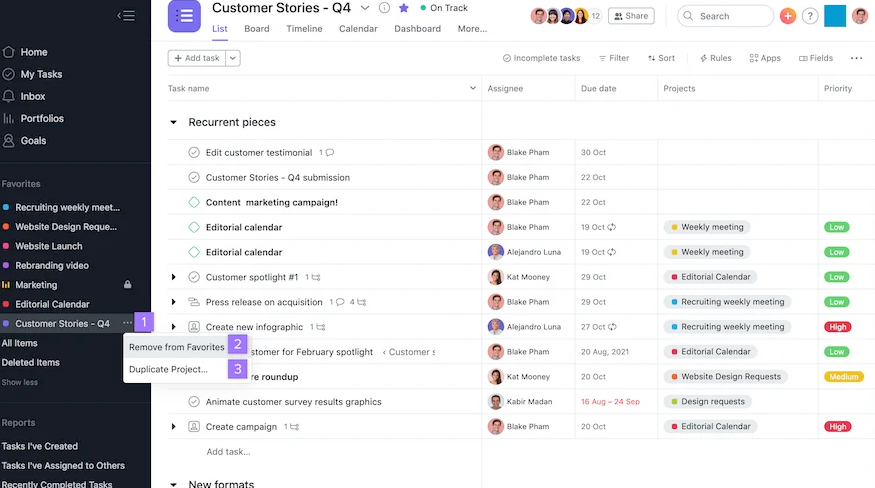
For the record, the picture above is Asana. I don't recommend it. Find something FOSS, ideally. You'll probably need to adjust whatever you find to your taste, and you need the source code for that...
Concept 2: Planning Work is Just as Valid as Doing It
The above leads me into my next concept very nicely. I know that project planning and breaking down a project or task into constituent parts is largely overhead because you're not actually doing the damned thing you need to be doing. You need to be okay with that. It is just as valid. In fact, it is critical, at least for me, because that's how I get the ball rolling and start doing the things I need to be doing. If you want proof of this (for me, anyway), I was basically in a total fucking slump this morning, and I got just the tiniest spark of inspiration and started writing this article's skeleton and BAM. Now I'm in full force mode and actually firing on all cylinders. And then I expanded upon that via Concept 1 above, and now we're really off to the races. You cannot have 20 irons in the fire without having a plan. A sequence. Whatever.
Analogy Time! An orchestra cannot play music without someone making the books of music for the musicians. It doesn't matter that writing a book of music isn't, itself, musical. The audience is there for the song, yes, but there is no music without the damn book. You have to be okay writing the book of music before the orchestra begins to play, otherwise everyone is working off of memory, the cognitive load is maxed out, and they'll probably suck or go off-script. I hope that analogy makes it clear. Especially if you are the conductor of half a dozen "orchestras"...
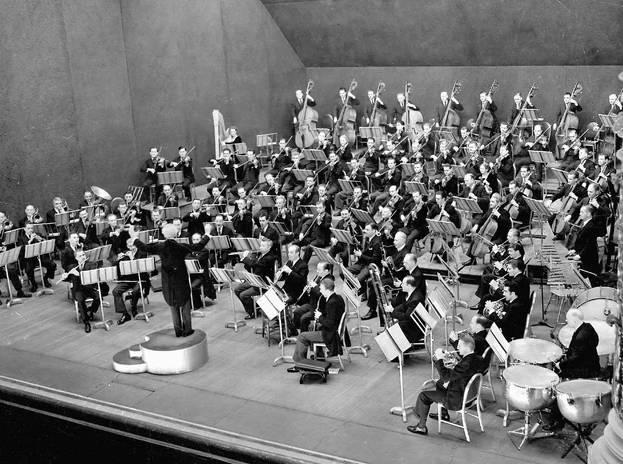
Someone should REALLY stop posting images of me on the internet.
Concept 3: You Are Only as Good as Your Tools
If I didn't have Drupal kicking around, I wouldn't write articles. If I didn't have automation tools to help me manage Pomf, I wouldn't bother. If I didn't have a calendar that lets me put tasks on it per day so I remember to, you know, do things, nothing would get done. If I didn't have project management tooling at work, nobody would be able to organize themselves and my manager wouldn't know what the hell's going on. If I didn't have Pomf, I'd never share files to anyone. If I didn't have Fedi, I definitely wouldn't share anything at all. If I didn't have a documentation platform, nothing would get documented. And if I didn't enjoy using these tools, I'd never use them.
I honestly believe that tools are what make or break a person. If you are surrounded by good tools that you like to use, they will only help you do things better or faster. If you are drowning in bad tooling that makes what you are trying to do harder, you will stall and get nothing done (see Concept 10) because it's not worth fighting. Invest in tools. Build really kickass automation. Find something that fills a role so well you enjoy using it. Put the time and effort into making things you like using. If you ever played Hearts of Iron 4, you'll know that as factories build something over time, they get better at building that thing, and they make more of it. That doesn't happen in a vacuum like in the game. In real life, that happens because of process improvements, better tools, better ways to use those tools, optimization. There is an upper limit here where the cost/benefit stops making sense, but I guarantee you that in the scope we're talking about here you won't find it. There is always a better tool or better way to use a tool.
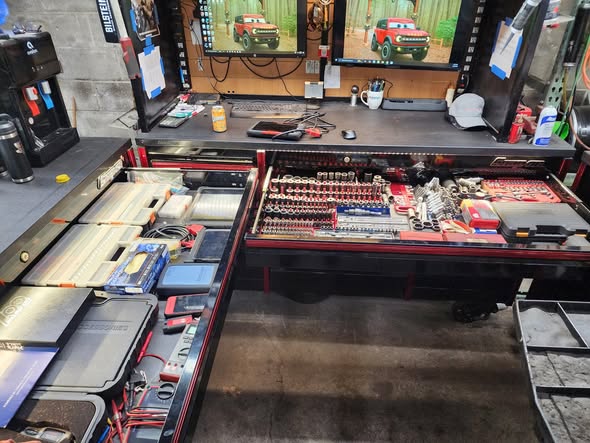
Would you rather have this, or a pile of junk in the corner? Aspire to this! It's worth it!
This goes hand in hand with project management, because I understand that investing in tools isn't actually going to get anything done - but again, that's okay. You don't have to be a bloodsucking company with "deadlines" or "profit quotas". Would a carpenter prefer to use a saw or a blunt rock to cut wood? Just because working on making a saw doesn't get you furniture immediately doesn't make it not critical to the building of said furniture. Just because sharpening your knives doesn't immediately get you to cutting something doesn't make it not a good practice to maintain your tools. Also, there is beauty in chaining good tools together to make things like dashboards, or Rube Goldberg machines that do anything and everything you ever wanted. There is a reason why the UNIX philosophy of making one tool do something very well is conducive to chaining tools together, and it's because each tool has its place. Swiss army knives generally do a lot of things, but they do those things poorly. It is better to have a dedicated knife, screwdriver, etc. If you have shitty tools, the products of those chained together tools will be shit too.
Concept 4: Offload Mental Tasks to Machines
This one's probably pretty obvious, but if you're keeping all this information and data and projects and parameters and planning in your head, you are doing it wrong. You are a flesh automaton. You have an amazing level of consciousness that has never before been seen in this universe, but you are still limited. You can't just go stick a bunch of RAM in your head. You are going to forget things. Human error is real. But look! We have all these computers that can do a billion things a second and generally do it without error. Why not find a way to offload this stuff to them, eh?
This goes hand in hand with Concept 3. Tools don't have to be the means to an end, they can help you too. People have attempted to organize themselves using flash cards or small slips of paper that contain just two parts - Ideas, and metadata used to reference those ideas to other ideas. This is a methodology known as Zettelkasten. People have then attempted to integrate Zettelkasten into a software program (such as Obsidian). I haven't tried it. I haven't even tried Zettelkasten. But it sounds so damn promising that I want to try it, because if I can offload this big pile of ideas into something to where I don't have to keep it constantly loaded into my head, that frees me up to do other things and revisit it later. Find ways to do this for yourself. You have a limited amount of energy and memory. You HAVE to use the machines around you as another tool (Concept 3 again!) to help your brain out. I don't have the answer to this yet, but I hope I will get there.
(Also - Yes, you can use AI to help you here too. I know there is a massive, massive stigma around AI right now, and it's 100% warranted, but don't artificially limit yourself. Use it tastefully and deliberately. I used it for Concept 4 because I forgot what Zettlekasten was called and I was punching in "flash card organization strategy drawers ideas relationships" into Google and it was telling me I needed a therapist (I probably do). AI knew what the fuck I was talking about almost instantly.)
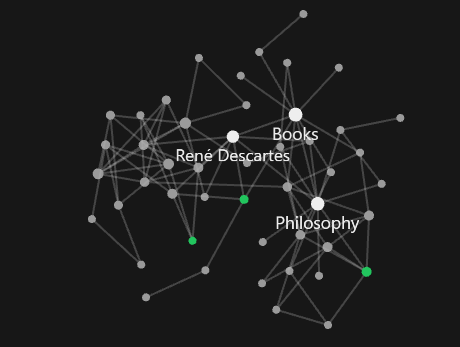
I really have to wonder if this is the silver bullet I have been looking for all this time.
Concept 5: Signal to Noise Ratio is Key
Every concept in this article will be useless if you poison it with irrelevant junk. Signal to Noise ratio is a phrase that I use over, and over, and over, and it's because it is so damn important. For those not into radios or electronics, Signal to Noise Ratio (SNR) is the delta between the strength of a signal (e.g. your WiFi) and the background noise around it (e.g. Mom is microwaving you tendies). You can do all of these concepts right, but if your project management idea is full of worthless junk, or your dashboards don't represent reality with bad datasets, or you get too many goddamn spam emails, everything will start to break apart, and you'll lose trust in your systems. That's a 7666-certified NOT GOOD moment. You must constantly assess the information that you have either pushed to you or the information you pull and ensure that it is useful information. Every alert, every email, every nugget of knowledge, every data point should be scrutinized for relevance. I am very gung ho about this, because if you get this right, you'll begin to trust the things you build and therefore trust yourself, and that is a very achievable and beneficial nirvana.
How about a relevant example? Observe this image.

See that? That's 1 email in my inbox, unread. I have read or dispositioned every other email (all ~38,000 of them). Why have I done this? SNR! And because the SNR is so high in my inbox, it turns my email into a de facto TICKET SYSTEM. Beautiful things happen when you do this in other areas or tools. Sometimes they get so good they fill another role entirely. Email is supposed to just be a communication system, but for me it's actually an organization system because I keep it clean as a whistle. Try to apply this concept elsewhere and watch the magic happen! And if you're one of those people with 6,000 unread emails... try some filters or some automation. Trust me. It helps and it's worth it.
Concept 6: Context Switching is the Enemy
Bouncing around 20 different things is how zero of them get done. Trust me, I know. Again, your brain has a limited amount of working memory, and certainly a limited amount of focus. If you squander this by constantly swapping between multiple different tasks, you will drown in overhead as you eject one task out of your head and reload it with another, over and over. Context switching takes overhead. It takes time to reload your head with whatever it is you are now trying to do. You need to stay focused on a handful of things at a time or you will get overwhelmed. If it happens to CPUs it can happen to you too (I see you, mentally ill robot girls).
First and foremost, reduce distractions and active workstreams. Email is fine as a context switch, but if you have 40 other things pinging you at the same time you're going to have a problem. Just as SNR is incredibly important, the relevance of those things that crop up, even if they are valid, should be assessed. Do not be afraid to take similar signals and group them up into a batch and then stuff them somewhere for later if you are working on something else. For a real world example: If I get an abuse report email, I generally ignore it until one or two specific times of the day and then I do them all at once. If I context switched for every email, it would mean anywhere from two to TEN context switches through my day instead of me corralling it to one or two designated times. That's unacceptable. You can apply this to anything that constantly bothers you, but be sure that you do, because this is an awful way to get stuck.
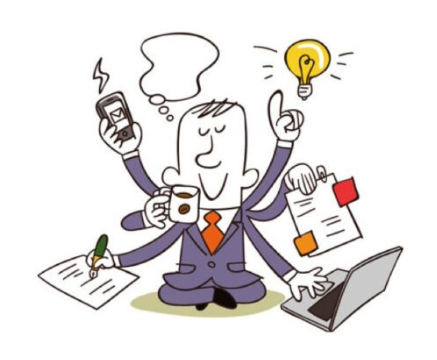
That is the smile of a man who is about three seconds from going postal.
Concept 7: Variety is the Spice of Life
Why do you think I put pictures, bolds, underlines, headers, italics, etc. in all my articles? Because reading some asshole's wall of text SUCKS! You should understand that variety is just as valuable when doing tasks or projects. If you do 20 things for the same project you'll get tired of it and start to falter. I know that context switching is bad, as I stated in the previous concept, but sometimes context switching in a controlled manner is the right call. You may return to the project with a fresh perspective. You might just want to go do something else. That's okay! Don't do it in excess, but in moderation it's a fantastic force multiplier. That's really all I have to say about this because it's self explanatory and easy to relate to.

I remember being VERY disappointed that these cones of spices were just cardboard cones underneath and not actually made of the spices themselves.
Concept 8: Always Have an Overview, but Don't Hide the Details
Dashboarding is an amazing tool, but at the same time, the devil is in the details. Information should be PUSHED to you. If you have to PULL it, you'll context switch, and we just went over why that is BAD. If you have to check 10 things to make sure they haven't fallen apart, that's 10 touchpoints you could have avoided with something that either A. sent you data directly or B. didn't send anything to you unless there was something that needed your attention (B is obviously preferred). While you're making these pretty dashboards though, ensure that the underlying dataset is accessible and reviewable so that it can be sanity checked at any time. Not having data is one thing, but being roped into a false sense of security with bad data is actually markedly worse.
You can apply this concept of overviews or dashboards to anything, because when done correctly they will save you time. Here are a few really crazy ideas I've had that would save a modicum of time but be very satisfying and really cool to do:
- Grafana dashboard with an overlay of my house that shows the status of every window and door in the place (open, closed, locked, unlocked) using hall effect sensors hooked to a WiFi connection.
- Level sensors for everything. The chlorine tank for the water filter. The salt bin for the water softener. The propane tank. Basically anything that normally has to be checked manually I want pushed to me directly so I am aware of levels. I don't want to hide the data though - I want to keep all of it rather than just point-in-time readings. That way I can also estimate remaining amounts via the graph trend.
- Smart outlets for things that run periodically like the sump pumps or water heater or AC unit, so I can measure usage and interval rates and see how everything is doing, same reasons as the above idea generally.
Right now I do all this stuff manually or not at all, and that means less time for me to do things if I have to do it manually or I miss something blowing up and have to fix it. Observability is probably one of the most important things that I learned when being a fledgling sysadmin. People wondered why I never missed a beat, or why nothing ever went down, or why I was able to tell them that they were going to run out of disk space in 86 days (give or take a few). I had a right hand man doing my dirty work and it was called a MONITORING SYSTEM.
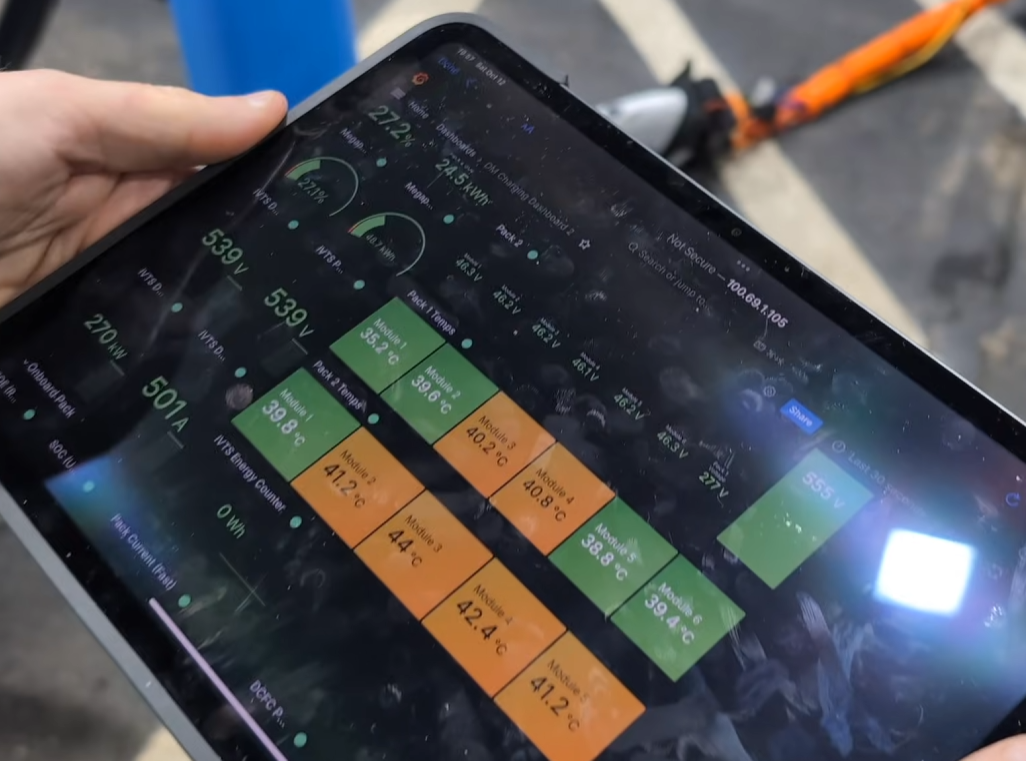
There is a reason why those crazy bastards running a Rivian across the country used Grafana. Look at it. Don't you want something like this?
Concept 9: Dopamine Gaming is Effective but Dangerous
Let me tell you a story about one of the most revolutionary ways that I changed how I work for the better, and why it is starting to become a serious, serious problem.
Currently, I use Proton Calendar as my active, day-to-day to-do list. It works well. I have multiple colors for multiple calendars, each calendar corresponding to a category (Blue is not done, Green is done, Orange for in progress, etc), and then those are overlaid onto each day. Here's a picture with a few redactions (I'm sure you understand).
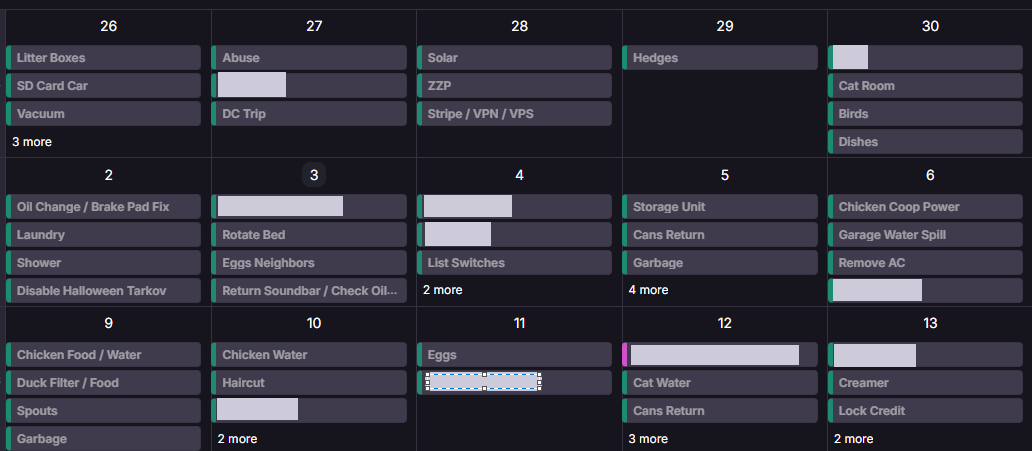
Now, this works well! It keeps me organized, prevents me from forgetting things, ensures that I get items done, and ultimately when a day shows up with nothing on it or I get everything complete, it is a great dopamine release. You probably look at the above and go "Wow, he's actually kind of organized! Where's the problem?" Well, did you catch it? Let me repeat it for you in bold:
When a day shows up with nothing on it or I get everything complete, it is a great dopamine release.
This system, unfortunately, rewards not doing things. This paradox has confounded me for years. Yes, I want to track work, but if the desired state is that everything is done, then the undesirable state is not having everything done, and the fastest way to game that system is to do nothing! And no, I don't have the willpower to just make that not happen. I'm sorry, I don't, I am a flawed person. Ugh. So that means this whole calendar thing, while it continues to work, is going to need an overhaul to avoid this. I have done little tricks here and there to extend its life, but they don't really solve the underlying root cause. Like as an example, I use procrastination to my advantage. If there's something I really, REALLY do not want to do, I will go do other things in its place that need to get done until that task I don't want to do is the last thing left. It's a really funny psychological trick I play on myself. You can even just postpone that bear of a task for the next day, confident that you got a billion other things done just to not have to do it as a reward mechanism. But again, it shouldn't HAVE to be this way. I don't quite know how to deal with this problem.
Concept 10: Be Careful of Stalling
If you fall victim to stalling like me (loosely defined as a negative feedback loop where you beat yourself up for not doing X and that beating makes you less likely to do X), you need to pay special attention to this scenario. For me, as stated above, I get my inspiration, motivation, self-worth, and all that jazz from doing things I am proud of. However, if I am not meeting my own lofty expectations by doing those things, it makes me less likely to do anything at all. This is similar to how a nuclear reactor is poisoned by Xenon-135 preventing reaction, or how it is harder to get an engine going than it is to keep it going.
I really don't have a good answer to this. My strategies thus far have been around trying to surround myself with things that inspire me to get going, or hyper-dividing work into tiny crumbs to get the engine going again so I can work on the larger chunks when I'm back at full speed. But, this is challenging, and I continue to find myself paralyzed by this phenomenon more times than I care to admit.

One of my favorite pumpkin designs because it is actually spooky.
Concept 11: You Will Die With a To-Do List that is Incomplete
This is the final concept because it's the one that tells you that you need to find ways to shut off or you will end up like me where you unnecessarily beat yourself up for being "lazy". I have a serious quandary of principles in that my respect for myself and others comes from what they or I do and the way that it is done. I have to hold myself up to such high standards because of this and because it's how I get my kicks, and it makes me feel superior to everyone else who can't meet those standards. This is not a way to live. It has provided me great willpower and unflinching resolve at the cost of eroding any sort of ability to just calm the fuck down and enjoy what I have already done thus far.
The ol' noggin says "It doesn't matter that you bought a house and did 20 different projects in it in the course of eight months because the point was to lay the foundation to do great things" rather than just seeing the ridiculousness of what I've done as a great thing on its own. It's not to say I'm not proud of this place, it's just that because of the volume of remaining open items, my performance is just not good enough for me. Coupled with immense pressures like Pomf running out of space or taking care of livestock or being surrounded by a project list the size of Infinite Jest and it just makes me feel not good enough. Sure, you can use that negative energy in a positive way to motivate (force?) yourself to do better, but you will burn out HARD doing this.
I was watching a video from The Proper People of the old IBM Palisades Advanced Business Center (link) and thinking to myself "I'd buy it in a heartbeat". The joys of restoring a place like that and all the possibilities it would bring as a fortress for my ideas and concepts are limitless. And then I sort of realized "I already have the small scale version of this with the log cabin, why can't I just use that", and then I realized "Hey, you can barely even handle keeping this place going, there's no way you can handle a giant business complex!". I just kind of got depressed after that. I'm not sure what the point is here, but it does ultimately tie back to the concept heading and what Adam Savage said in that video that got me so emotional. You will die with a to-do list that is incomplete. I know he meant for that statement to be reassuring and for it to be okay to let some things go, but to me it was the scariest sentence I had ever heard uttered.

I see people selling their unfinished projects all the time and it depresses the hell out of me. It feels like someone admitting defeat.
Concept X: All of the Above Concepts Should Really be Strung Together Somehow
(I called it Concept X because it sounds cool, and so that I don't have to keep changing the fucking number every time I insert or remove a topic to talk about. Brilliant, huh?)
Time will always be the enemy of the human race, and making the best of the time we have is the best way to spit in its face. I don't know if all the concepts above will help me or you get to a place where we have plenty of time because all of our time sinks are handled, our project list is tidy, and we feel good about what we do and how we do it. Hell, I have trouble keeping to these guiding principles myself. I have so much work to do to get all of this stuff figured out before I can actually work on the things that these concepts and systems are meant to enable. It's daunting.
I know I am capable of it though, because when I actually am firing on all cylinders, the amount that I can do far exceeds what the average person can do. I'm not tooting my own horn here unnecessarily. I conceptualized and wrote this entire article in three and a half hours flat. In theory I should be able to pop off about two more magnum opuses (opi?) before the day is done, but we all know that's not how it works, so I guess the theory is just "how do I enable myself to find these wellsprings of energy more frequently and regularly to further my projects?". I think being capable of doing this but not capable enough of the mental fortitude to do it consistently is what really gets to me.
If anything I've said here helps you in any way though, I'd call that a victory. I really only wrote all of this for myself, and I don't know how I will take all of these valuable puzzle pieces and fit them together. At a minimum, I feel proud to have written all this down, and now get to bask in the glow of dopamine once more with an article that meets my expectations. And, I guess I've kicked the can down the road by at least writing this and planning it out, pursuant to Concept 2. I think I'll let myself relax the rest of the day now that I've done this, pursuant to Concept 11.
Hey, maybe I don't suck at this after all...
With the utmost respect and love, because I don't say it often enough,
-7666
EDIT: Uh oh! Inspiration strikes again! Here are some bonus concepts I thought up after writing this.
(1/7/2026) Concept A1: Use Your Environment to Screw With Your Head
In the first additional concept, I want to talk about using your environment as a mechanism to facilitate a lot of the above concepts. I call this "Ambient Steering", a up-your-own-ass way to basically tell you that you can passively and psychologically game yourself. Here's how.
You probably live in a house, or an apartment, or generally a space you can call your own (I hope). This space can be used in multiple creative ways to passively steer yourself towards better habits. Remember how I said in Concept 8 that information should be PUSHED to you? You can push information to you in more ways than just push notifications or little alerts on your phone. Use your environment! Your brain will get very used to the way something looks, and if something is off, it will force a context switch (in a good way). You can use this to your advantage. Here are some ideas:
- Get smart bulbs. Change the colors based on the time of day to steer yourself towards different activities, or maybe change them to a specific color to prompt yourself that it may be time to do something you need to do. Integrate them with something that can process that logic and send commands to them, like Home Assistant. This concept is used in a program called F.lux, which later turned into "Night mode" for many devices, to help people get off the computer late at night. I don't use it, but it embodies this principle perfectly.
- Put a TV up in a conspicuous or well trafficked location. Put those pretty dashboards on something that you can see at a glance. Your eyes will probably go to the TV naturally, but if you put big red alerts on the TV based on conditions, you'll probably stop in your tracks and go "hmm".
- Grab some little battery powered controllable LEDs and stick 'em on stuff you need to remind yourself to do, or want to draw attention to programmatically. Maybe you could stick one on your cat's litter box, and it starts green, but after a few days turns yellow, and after a week turns red to remind you to just do the damn thing. Just don't get used to the red color - make sure the default state is green! Use this anywhere you need recurring reminders to do and don't want to check a calendar 24/7.
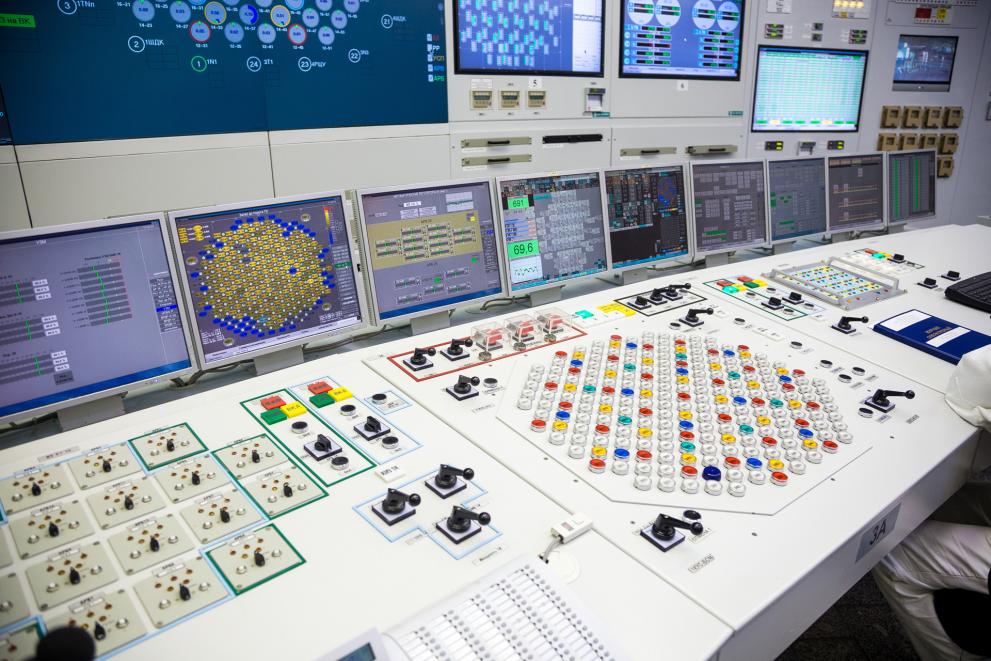
Why do you think nuclear reactors have a control room?
If you want proof of this phenomenon, add a light in a room that stays on 24/7, and wait for the light bulb to blow out, however long that takes (or unscrew it after a month, but ideally you want to forget this light exists). The room will look weird after it goes out because its state has been altered from the default and should basically give you whiplash. There is the possibility that maybe this is only how *I* work and everyone else doesn't give a shit (smoke alarm chirp?), but I know it works for me. These triggers can be operationalized into something you can use assuming you are observant enough.
(1/7/2026) Concept A2: Mind Over Matter is Generally Bullshit
However much I wish it were true that I can just force myself to do things, I have to come to terms with the fact that I am made of meat, controlled my chemicals, and that my state of mind is heavily influenced by said chemicals. Don't believe me? Go get drunk. Consciousness is a weird and wonderful thing but it is very much fallible, and the sooner you admit that your body can very much control your mind, the better. Once you do, it means you can hack it.
"That will be your butt."
Okay, we're not going into crazy nootropic crap or anything. More that you should focus on your health if you are having systemic issues following the concepts above. The issues could very well be physical limitations preventing you from getting anything done! Ever hear of ADHD? Amphetamines actually help with focus while regular ol' people go bananas and write 20 research papers in one shot or whatever. Same drug, different result, different body. Go read some medical journals yourself: https://pmc.ncbi.nlm.nih.gov/articles/PMC3489818/
Make sure you're getting your vitamins. Go get some bloodwork done and make sure nothing chemically could be screwing with your state of mind. If you think something is off, see a doctor and try to talk it through, and if there's no good reason why you are feeling the way you are, it could be a physical problem and not simply you sucking at life. People drink coffee because of caffeine. People drink energy drinks because of the cocktail of weird but ultimately energizing crap they have in them. People take supplements because they believe (rightfully or not) that they're missing something in their body that is causing problems. This stuff isn't crazy talk, everyone does this stuff every day without really acknowledging that they are chemically gaming the system, and there is nothing wrong with that. Don't feel bad you have to take a pill to function. Be glad we have the technology to make you functional at all.