Do you remember how in my "Pomf Return Project Tracker" thingy (assuming you read it) how there was an entire line item dedicated to "getting the power situation handled"? Well, that was actually secretly the most complex and expensive portion of my entire project. We're talking multiple complex moving pieces, multiple test scenarios, more questions than an autistic kid in a train yard, $160k in labor and equipment. Why? Because I bought a whole ass PV system sized to run my house and servers 100% with batteries and generator integration for full off-grid support. Because I'm nuts. And because it is cool.

Yes! This is a small part of the REAL electrical plans for my system!
But what do all the big fancy terms in the title have to do with that? You're just making and storing power. How can it be complex? Well, my little grasshopper... Wait until you see what Capitalism has done to the power grid...
As always, first, a table of contents.
A. My Giant Ass PV System - Components
B. My Giant Ass PV System - How They Work Together
C. Off Grid Running
D. Graphs, Monitoring, Integrations
E. Net Metering, Energy Arbitrage, and AI Datacenters
Let us begin with the "what", then the "how", then the "why".
My Giant Ass PV System - Components
Don't mind the angry microinverters, they're just bitchy.
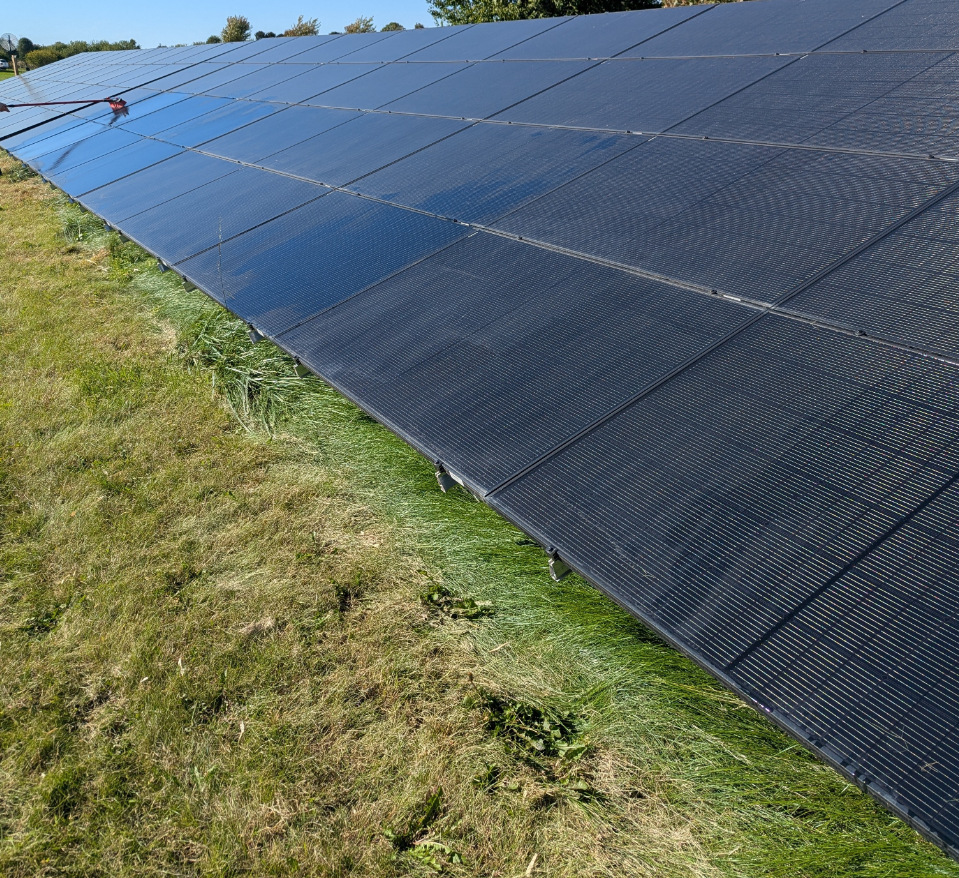
My solar system is an approximately 35kW DC (24kW AC) system consisting of 84 solar panels set up as two independent (but AC coupled) arrays. If everything is firing on all cylinders, the system will put out a full 100 amps of power at 240 volts, which is insane.
It ain't easy bein' a solar farmer.
Now, for most people, this would be more than enough. What a project! But alas, I am not most people, and I just had to add batteries to this system.
Glad we had enough wall space to mount these suckers.
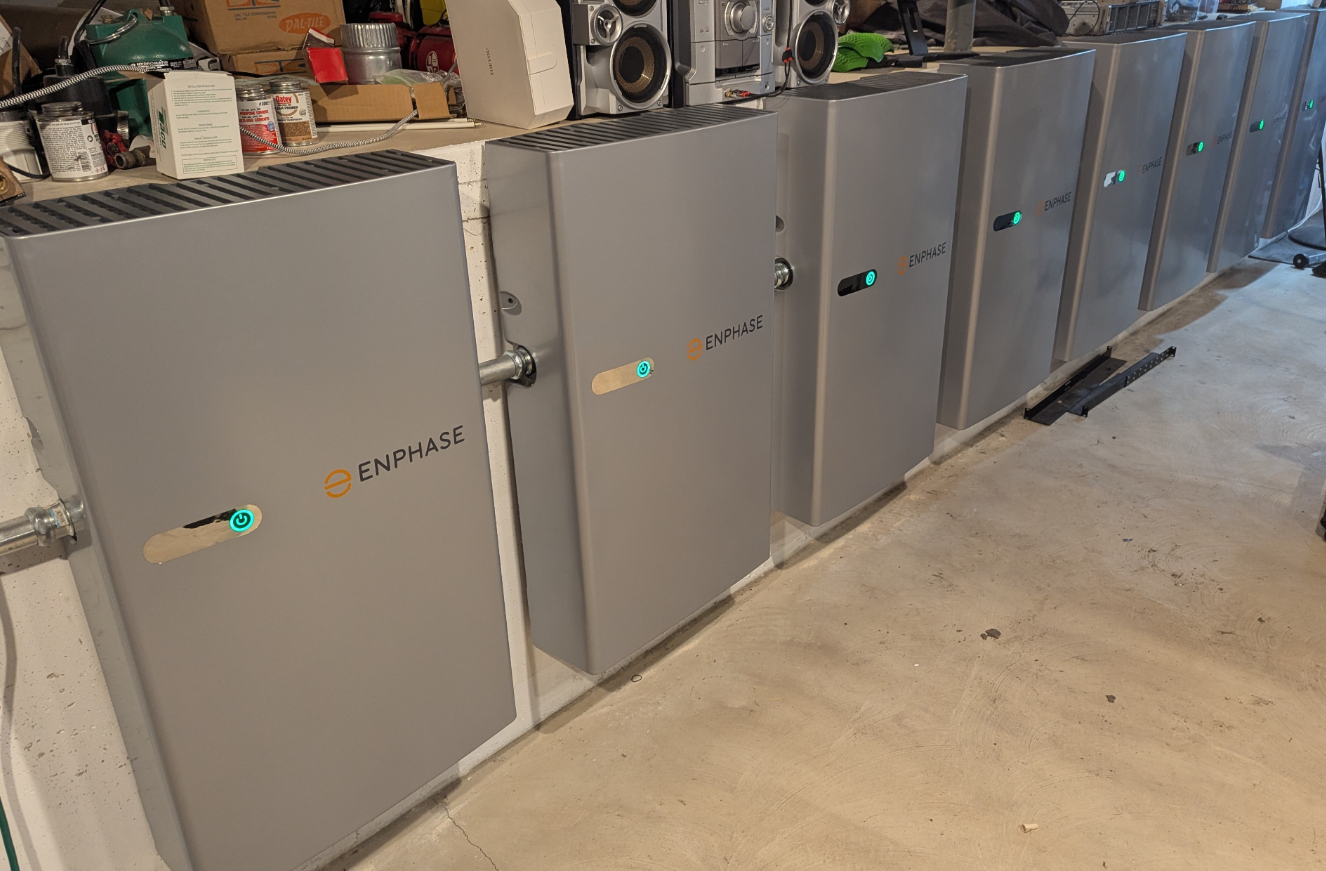
Yep, that's EIGHT 5kWh batteries for a total power capacity of 40kWh, not including the redneck UPSes I built years ago that add another 15kWh or so for the servers themselves. This is enough to run the ENTIRE datacenter/house for about 4-6 hours, depending on loads like air conditioners or if I'm playing vidya or if a customer just started bitcoin mining (please don't do that).
Now, for most people, this would be more than enough. What a project! But alas, I am not most people, and I just had to add my existing 14kW generator to this system.
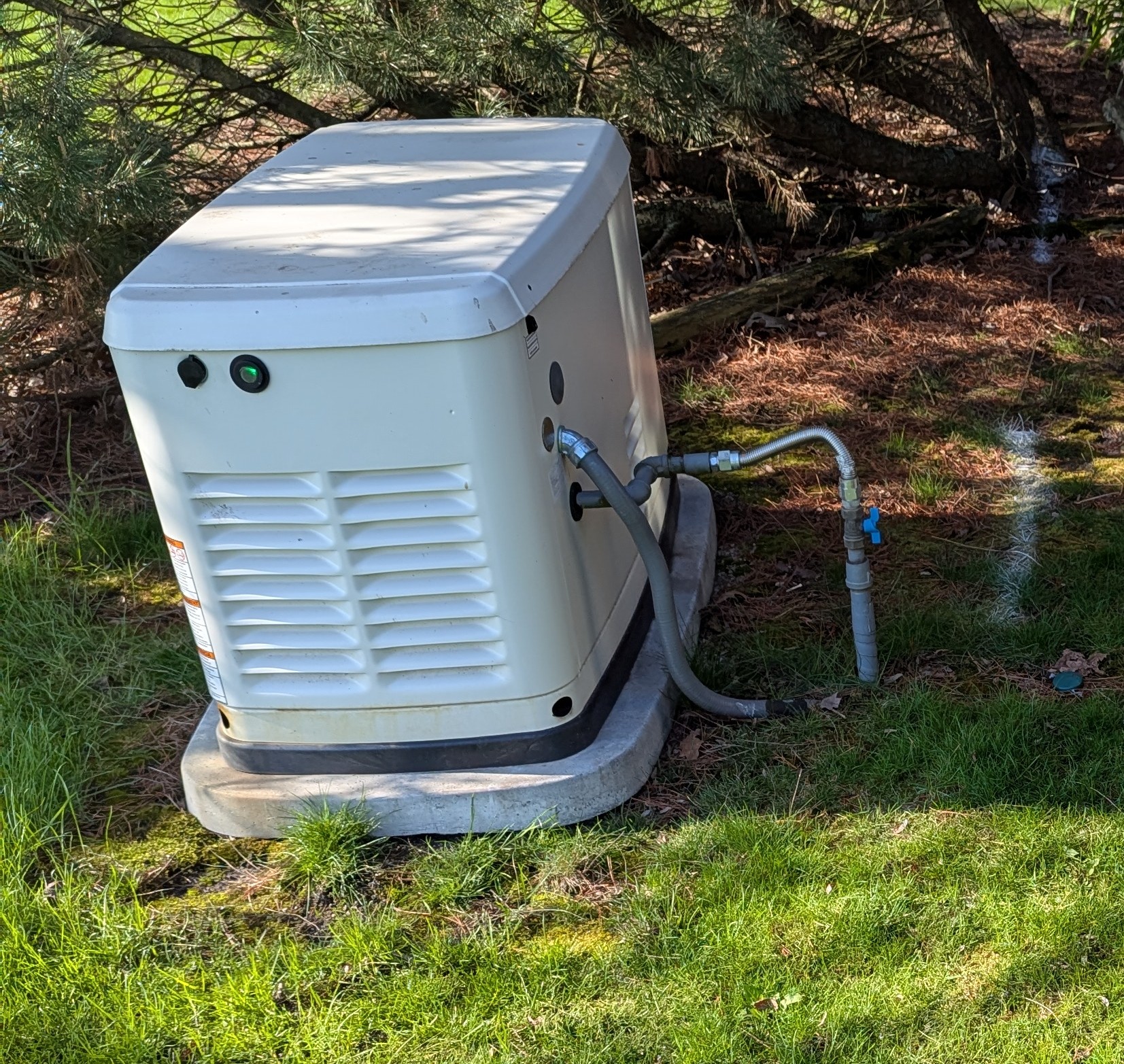
Yep. So if you've been counting, we now have FOUR sources of energy total. Grid, Solar, Battery, Generator. They all work in concert to power this place, saving me hundreds, if not thousands, on my electric bills each month. Pretty slick.
My Giant Ass PV System - How They Work Together
You may have been seeing the word "Enphase" kicking around. Known widely as the "Apple" of solar, Enphase touts a fully AC-coupled system. What does this mean? Well, it means that each DER (distributed energy resource) can contribute to loads simultaneously. The panels can feed the house and the batteries. The batteries can feed the house and the grid. The generator can feed the house and the batteries. So on, so forth, all in real-time, all at the same time, whether you are on the grid or off the grid.

Here is their very simplistic overview of how this works. By the way, I am an official Enphase certified installer now.
What this means is that all of the scenarios below are entirely possible, and I have personally tested and certified that they 100% work:
- I want to be on the grid but have batteries kick in if the grid goes down.
- I want to run my house entirely off the batteries on demand.
- I want my generator to run the house and charge the batteries if they run out.
- I want my generator to run the house and charge the batteries if they run out but have the batteries kick back in if the home load exceeds the max generator set point.
- I want my solar panels to run the house first and then charge the batteries with the excess.
- I want my solar panels to run the house first and then charge the batteries with the excess AND then export the remainder to the grid for credits.
- I want to have the batteries run the house while the panels export to the grid for credits.
- I want to dump EVERYTHING I've got into the grid for credits.
- I want to charge my batteries off the grid if there is a storm coming and the sun is down.
This is how flexible this system is. Everything above is a scenario that I have tested and realistically could be desired under whatever weather and market conditions exist at the time. It is just THAT good. Here are some screenshots of a few of those scenarios in action.

Various automations exist to dynamically change how this system works based on the time of day or current power costs. For example, I have the system set to export the panels to the grid and run the house off the battery between 5PM and 8PM because the power costs are historically higher during this time period. Once 8PM swings around (or the batteries hit their reserve capacity of 35%), it switches back to importing from the grid. However - the grid was never truly disconnected. It just stopped pulling power from it.
Off Grid Running
As you know, I do NOT want my servers to go down, ever. Power is the most common thing to be interrupted to my servers, followed closely by the network. Therefore, I needed a system that would allow me to run off grid 24/7. Obviously, the sun does not stay up 24/7. And the batteries are insufficient to make it to morning (and I can't buy more, the system is actually maxed out at 8).
So that's where the generator comes in to cover the remainder. Seeing as I have a 500 gallon propane tank (and I expect to use approximately 25 gallons a day assuming some sunny days and static consumption rates) as well as a contract with a supplier who knows I have a generator, we quite literally can run 24/7 off grid. I'd only start to get concerned when it's time to service the generator, but I have the required oil and filters and such so it shouldn't be too bad to complete inside of a charge cycle.
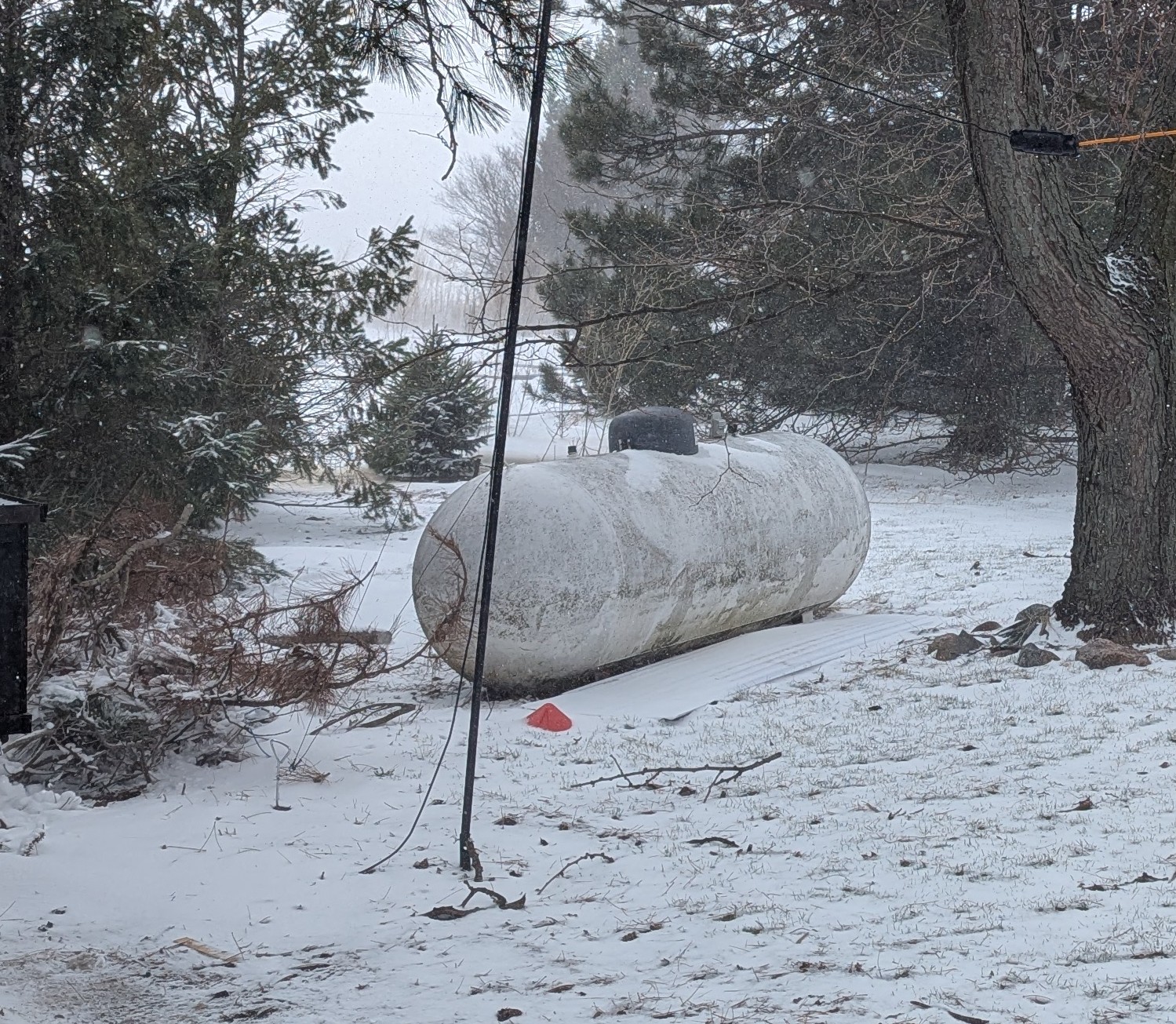
Yep, that's three weeks of power in a big cylinder.
My power system currently operates in this following order of priority:
- Solar
- Grid
- Battery
- Generator
- Primary UPS system
- Secondary UPS system
The primary UPS system is the big system back from when I used to run all this in a townhouse garage and in the crawlspace of my old house. In case you didn't know, I actually have two of these systems (the blue and orange things) now vs. just the one.
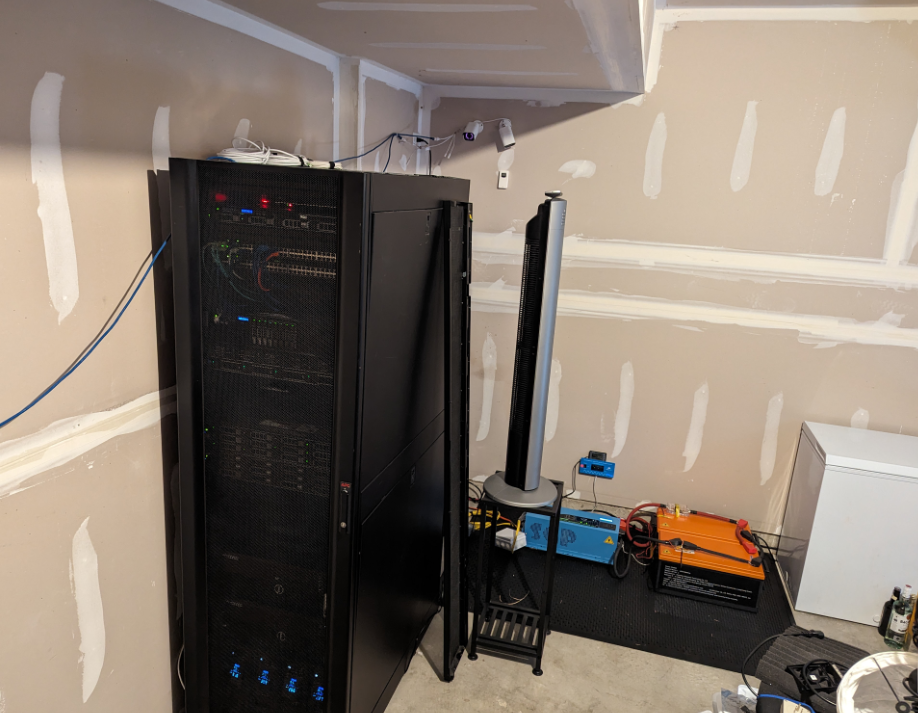
I do still get nostalgic over my previous "datacenters". I always put so much work into them.
The secondary UPSes are the four Cyberpower 1500VA PFC units that have always been at the bottom of the rack.
Graphs, Monitoring, Integrations
So with all of this crazy cool technology, I bet the data that comes out of it is just as cool, right? Oh yeah. You fucking bet it is.

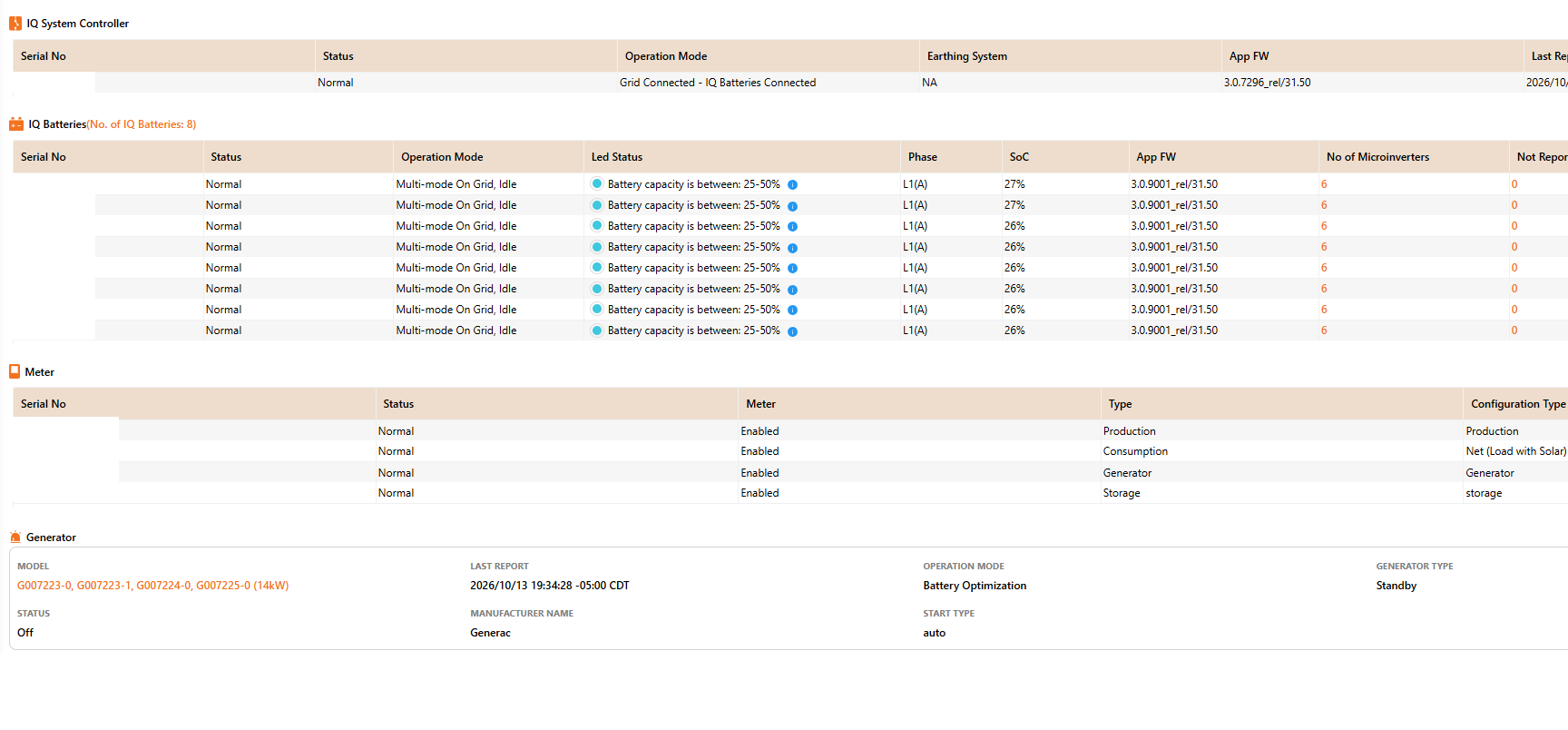
More data than you can shake a stick at!
And if the above wasn't enough, we have Grafana integrated. Because of course we do. A special thanks to Mori for stringing all this together.
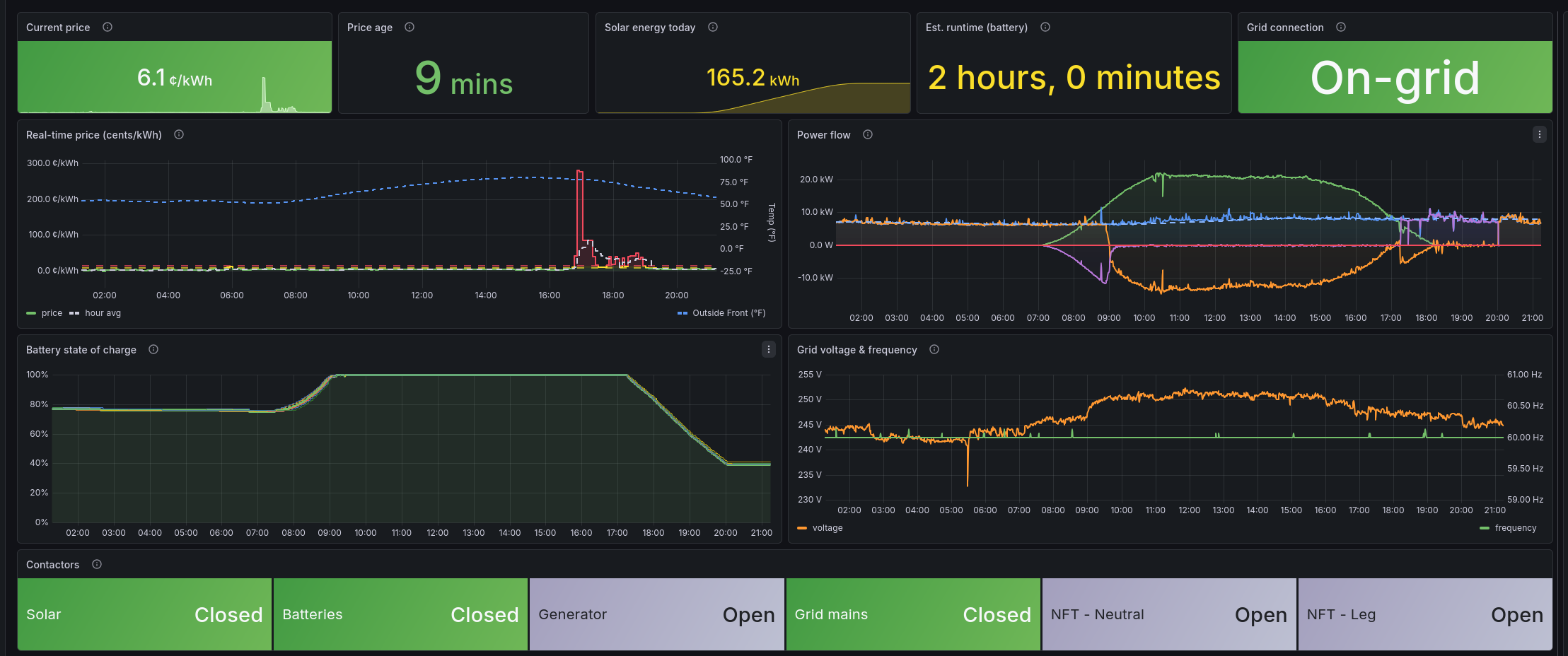
Isn't it beautiful?
Net Metering, Energy Arbitrage, and AI Datacenters
And so it is time for the meat and potatoes of this article. Yes, being fully renewables powered is cool. Yes, being able to be off-grid for any amount of time is cool. But what was my primary motivation? It was, of course, to offset my power bill entirely and start racking up credits so I can cash those credits out by sending the power into colocation customers here (which, if you ever want colocation service, you know where to find me).
Let's start with a picture, because it is literally worth about a thousand words here. This chart is what drew me to write this article today and get it out of the backlog pile ASAP.

This chart right here shows the effects of a PJM EEA Level 1 alert. An EEA is an "Energy Emergency Alert". It basically means that the grid is unable to sustain the current loads, and that backup generation needs to come online while large loads switch off the grid onto their own generators to ease the strain.
You might be asking yourself, "Hey 7666, does this mean your power costs are variable throughout the day?" and the answer is YES. Down to a resolution of FIVE MINUTES. If there is a severe grid event, power prices spike through the roof into the multiple DOLLARS per kWh, and the utility passes those costs down onto you. Now, to be fair to the utility, I chose this path deliberately. You can be like anyone else and just pay a regular fixed price for power. However, this program known as "hourly pricing" (which is a terrible name, it's like minute-ly pricing) I chose, because the power costs are usually significantly lower than the fixed price EXCEPT when events like this occur. And now that I have this system in place, not only can I mitigate those events entirely, I can profit off of them.
When you choose hourly pricing alongside solar net metering, you get the ability to export your power at that current market rate. During the mornings, this is basically fuck-all, at 2-3 cents per kWh. But when one of these events occur, I'm making more money than a fry cook. And if I decide to dump the batteries into the grid simultaneously, I'm making more money than his manager.
So now let's talk about that chart, but with some helpful lines added in for reference.

First, a color legend:
- The blue line is home load.
- The blue dashed line is average home load over a rolling multi-hour period.
- The orange line shows grid usage (positive is import, negative is export).
- The green line is solar production.
- The purple line is battery (positive is discharge, negative is charge).
- The red line is generator.
Now, what my annotations mean:
- A. This shows the middle of the night when I am simply importing power from the grid. That weird square-wave function is actually the main AC kicking on and off. It is a single stage compressor unit from 30 years ago. It will run for longer periods if needed, and shorter periods if not needed, resembling a PWM signal if you've ever seen one.
- B. This is when the panels are actively producing power as indicated by the green line. It was, unfortunately, partly cloudy today. Clouds do really screw up solar production, by up to 60% at a time.
- C. This is just the dryer running. It's electric.
- D. This is when I have the batteries scheduled to start fronting the home loads and the solar to dump right to the grid as power costs traditionally rise around this time. Reference the power chart above to compare.
- E. This is where I pull out all the stops and command the batteries to dump to the grid, seeing that the power prices are now over $2/kWh.
- F. This is where the batteries finally ran out of juice (minus their reserve) and I swapped over to generator power since prices were still quite bad.
Based on my arbitrage of the energy market, leveraging my solar and battery and generator capabilities, it is likely that I made somewhere in the neighborhood of $60-$80 in energy credits. If we add in what we would have had to pay for power around this time at an average of about 7kW pulled for 3 hours at $2/kWh, it's another $42 saved. In just three hours this system made likely over $100. Pretty extraordinary, huh?
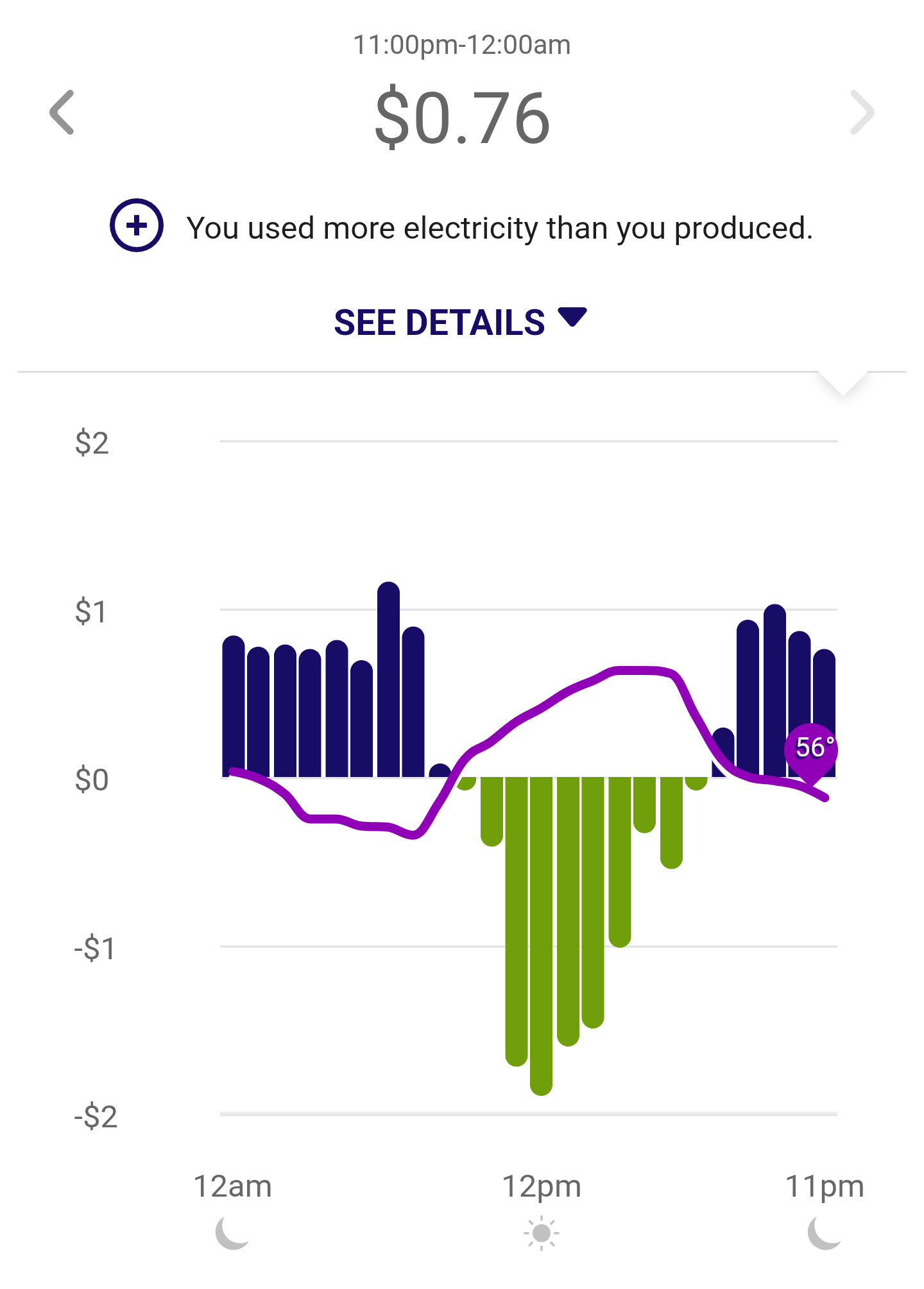
This is what my daily power bill looks like from a cost perspective.
Pretty much balances out, even though we're talking hundreds of kWh in both directions.
It's unfortunate that America's power grid has come to reward these shenanigans. Coupled with rising energy costs and AI datacenters sucking down power by the gigawatt, the regular consumer who isn't a total maniac (read: me) gets shafted on their power bill. Even if they're on fixed price rates, those rates have been steadily going up as more and more power is demanded by the grid, and less and less of it is available to go around, leading to more energy emergencies.
The worst known incident of this was Texas's snowstorm back in 2021, where people on variable rate pricing got smacked with bills in the thousands of dollars due to the energy shortage. A certain pudgy cat that lives here made it through that incident (cat tax below). The interconnection utility that I am on is known as PJM, and their energy emergency portal provides a sobering look at the grid's health, now with multiple EEAs happening a year, driving bulk power rates up all over the Mid-Atlantic. Today there was an EEA. Tomorrow there will be an EEA. And while I stand to profit, at no point do I consider any of this normal. I am uniquely positioned to take advantage of it, but would I rather just have a stable power grid? Yeah. Of course.
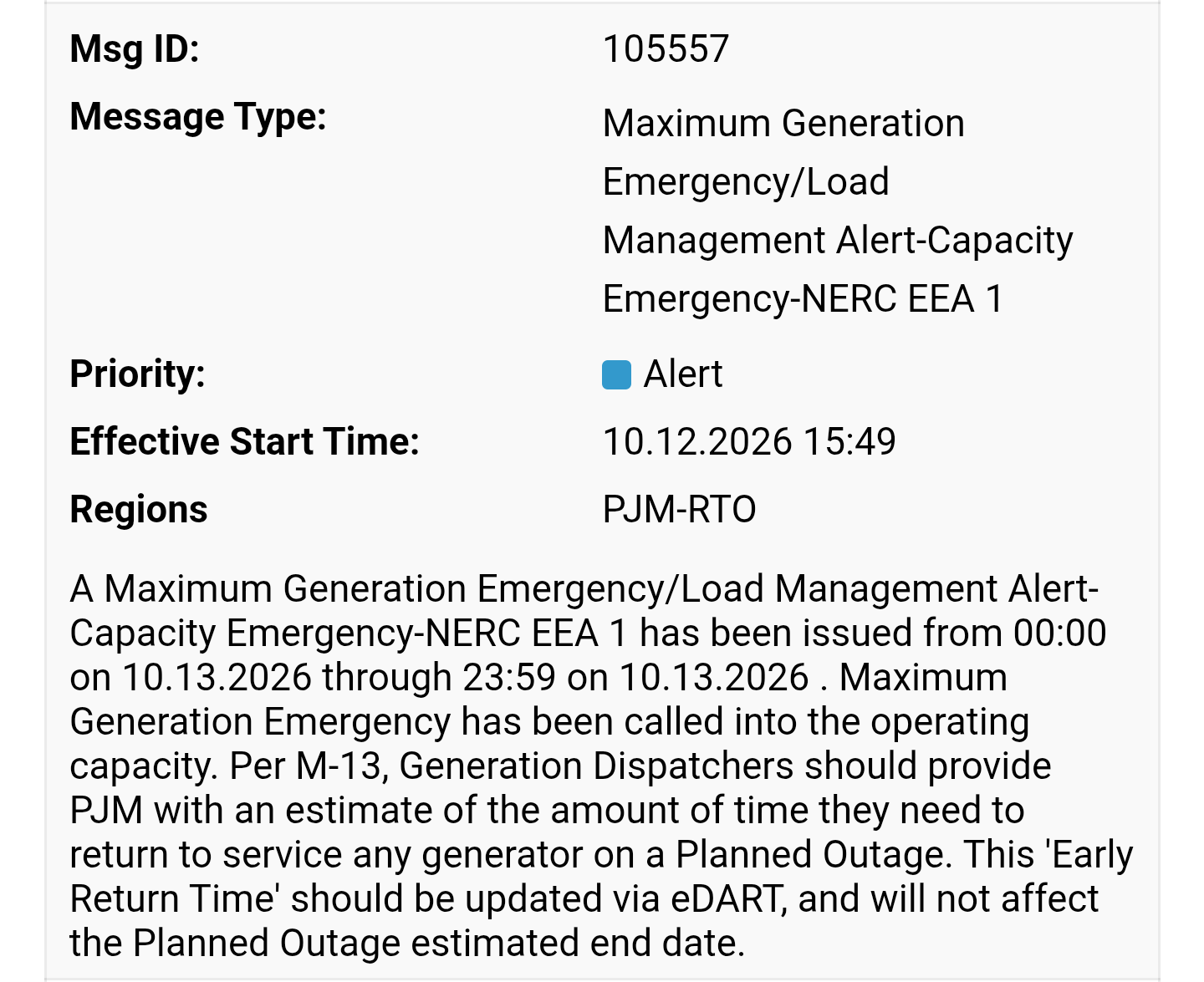
It's always bittersweet to see these. Yes, I make money, but a lot of bad shit has to happen for an EEA to be issued...
Anyway, that's why this system took so long. I am so incredibly chuffed (chuffed, I say!) at how well it all works as a simultaneous renewable energy system, energy storage resource, full off-grid enabler, and energy arbitrage instrument.
-7666
Lain.la
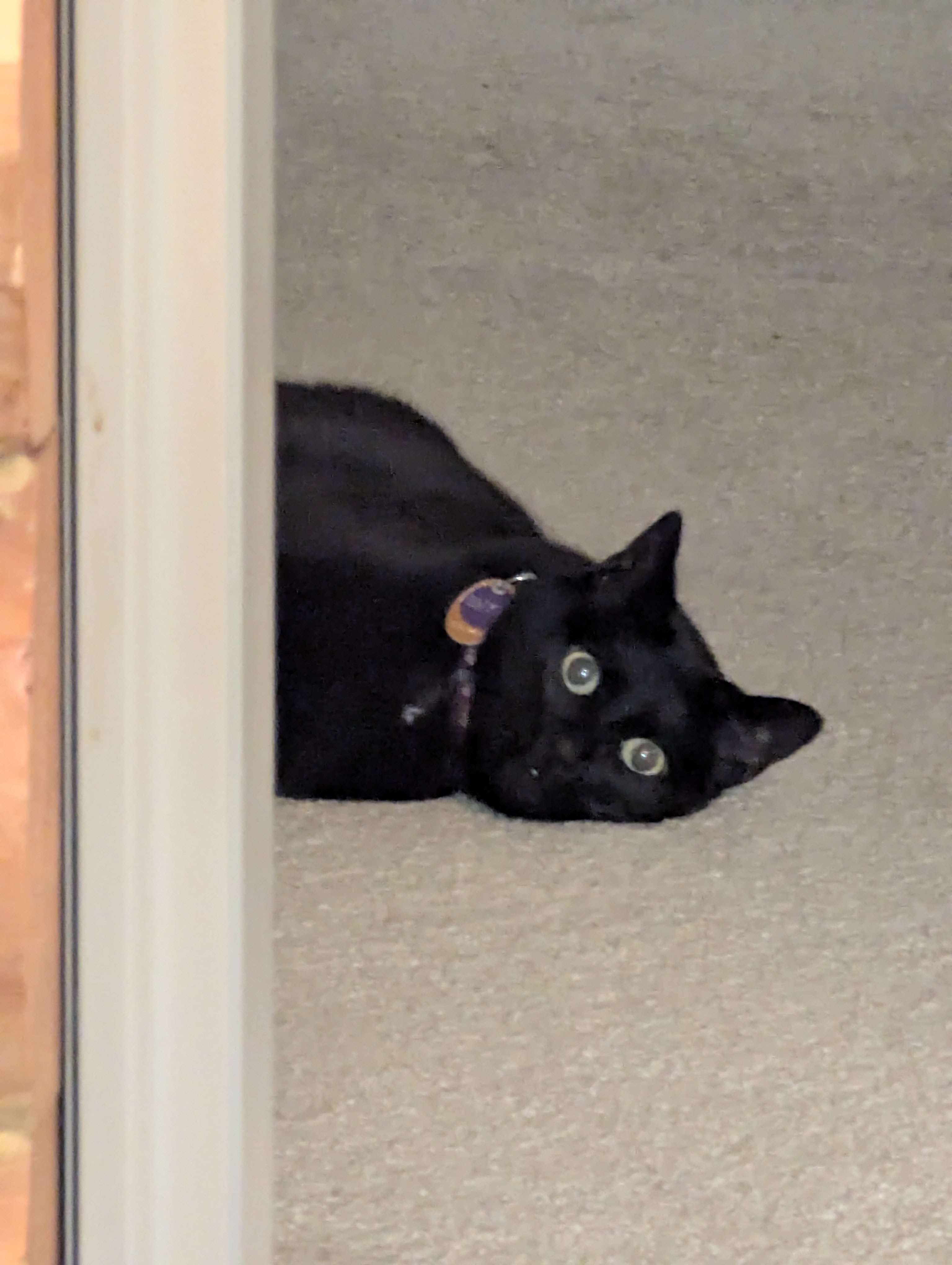
Cat tax: Paid.